
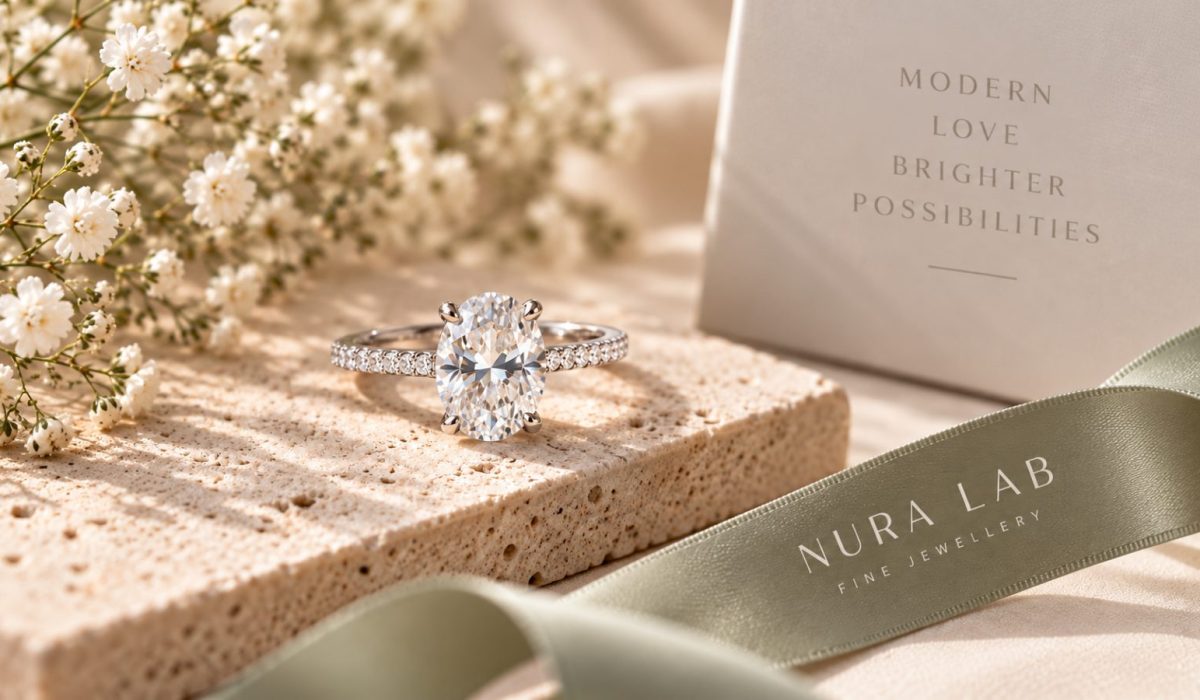
Choosing an engagement ring often starts with one major question: what should the centre stone be?
Diamond remains the traditional choice, but moissanite has become increasingly popular with couples who want strong brilliance, excellent durability and more flexibility in their budget.
The two can look similar at first glance, but they are different gemstones with different optical characteristics, origins and price structures.
The right choice depends on what matters most to the person wearing the ring.
Moissanite and Diamond Are Different Materials
A diamond is made from carbon arranged in a crystal structure. It may be mined from the earth or grown in a laboratory.
Moissanite is silicon carbide and is a different gemstone entirely.
Natural moissanite is extremely rare, so the stones used in modern jewellery are generally created in laboratory environments.
This distinction matters because moissanite should not be described as a type of diamond. It has its own characteristics and appeal.
Both Stones Are Suitable for Everyday Wear
Durability is important for engagement rings because they are usually worn every day.
Diamond is the hardest known natural material and scores 10 on the Mohs hardness scale.
Moissanite is also extremely hard, generally around 9.25 to 9.5, making it highly resistant to scratching and suitable for regular wear.
Neither gemstone makes the entire ring indestructible, however. The setting, claws and precious metal still need to be designed and maintained properly.
The Biggest Visual Difference Is Sparkle
Moissanite and diamond interact with light differently.
Diamond is known for a balance of brilliance, scintillation and fire. Moissanite usually produces stronger rainbow-coloured flashes because of its higher dispersion.
Some people love that vivid sparkle. Others prefer the more traditional appearance of diamond.
This is one reason the choice should be based on personal preference rather than the idea that one gemstone is universally better.
Budget Can Change the Decision
Price is one of the clearest differences between moissanite and diamond.
Moissanite generally costs less than a diamond of similar visual size.
That can allow buyers to choose:
- a larger centre stone;
- a more detailed setting;
- platinum instead of gold;
- additional accent stones; or
- a more customised design.
For couples who care strongly about the overall look of the ring, this flexibility can be valuable.
Diamond May Be Better for Buyers Who Want a Diamond
For some people, the fact that the centre stone is a diamond is emotionally important.
In that case, moissanite may not be the right alternative simply because it is less expensive.
Lab-grown diamonds have changed this part of the market because they allow buyers to choose a real diamond with a different origin and price structure from mined diamonds.
This gives customers another option between mined diamonds and non-diamond gemstones.
Moissanite Can Be the Better Choice for Sparkle and Size
For buyers who do not specifically require a diamond, moissanite can offer exceptional visual presence.
Larger moissanite stones can create a bold engagement-ring look while allowing more of the budget to go toward the metal and craftsmanship.
Collections such as Nura Lab moissanite rings show how the gemstone can be used across solitaire, halo, trilogy and other modern engagement-ring styles.
Shape Affects How Each Stone Looks
Both diamond and moissanite are available in a wide range of shapes.
Popular choices include:
- round;
- oval;
- radiant;
- emerald;
- pear;
- marquise;
- cushion;
- princess;
- Asscher; and
- heart.
Brilliant-style cuts such as round, oval and radiant can emphasise sparkle, while step cuts such as emerald and Asscher create broader flashes of light and a more architectural appearance.
Different shapes may also show moissanite's rainbow fire more or less strongly.
Consider the Setting as Well as the Stone
The setting can change how both gemstones appear and how practical the ring is for daily wear.
Solitaire
A solitaire places the focus entirely on the centre stone and is a good way to appreciate the individual character of either diamond or moissanite.
Halo
A halo adds smaller stones around the centre and creates additional sparkle and visual size.
Hidden Halo
A hidden halo adds detail beneath the centre stone while keeping the top view relatively simple.
Trilogy
Three-stone designs can combine a larger centre stone with matching or contrasting side stones.
Bezel
A bezel setting surrounds the edge of the gemstone with metal and can create a clean, modern appearance with additional protection.
Metal Choice Can Influence the Final Look
Yellow gold, white gold, rose gold and platinum all create different effects.
White metals can emphasise a bright, cool appearance, while yellow and rose gold create warmer contrast.
The metal should be chosen according to personal style, maintenance preferences and budget rather than the gemstone alone.
Think About Long-Term Wear
Both diamond and moissanite can be worn for many years when the ring is properly made and maintained.
Regular cleaning helps maintain brilliance, while professional inspections can identify worn claws or other issues before they become more serious.
It is also worth considering the height of the setting and how easily the ring may catch on clothing or everyday objects.
For someone with an active lifestyle, a lower or more protective setting may be worth considering regardless of which gemstone is chosen.
Certification Works Differently
Diamonds are commonly sold with independent grading reports that record characteristics such as carat weight, colour, clarity and measurements.
Moissanite is not generally graded in exactly the same way as diamond, although suppliers may provide documentation describing its specifications and quality.
This is another reason buyers should understand what they are purchasing rather than relying only on terminology such as “certified.”
Personal Preference Should Lead the Decision
The best centre stone is the one that matches the buyer's priorities.
Choose diamond if:
- having a real diamond is important to you;
- you prefer traditional diamond light performance;
- independent diamond grading is important; or
- you value diamond as part of the symbolism of the ring.
Choose moissanite if:
- you love stronger rainbow fire;
- you want more visual size within your budget;
- you do not specifically require a diamond; or
- you want more budget available for the setting, metal or customisation.
There Is No Universal Winner
Moissanite and diamond are often presented as competitors, but that framing can make the decision more confusing than it needs to be.
They are different gemstones serving different preferences.
A buyer who loves the history and symbolism of diamond may never be satisfied with moissanite. Someone who prefers the brilliance and value of moissanite may see little reason to pay more simply for the diamond name.
The most useful approach is to understand the differences, compare the stones visually where possible and choose the option that feels right for the person who will wear the ring.
That decision will usually matter far more than following a traditional rule about what an engagement ring is supposed to contain.