
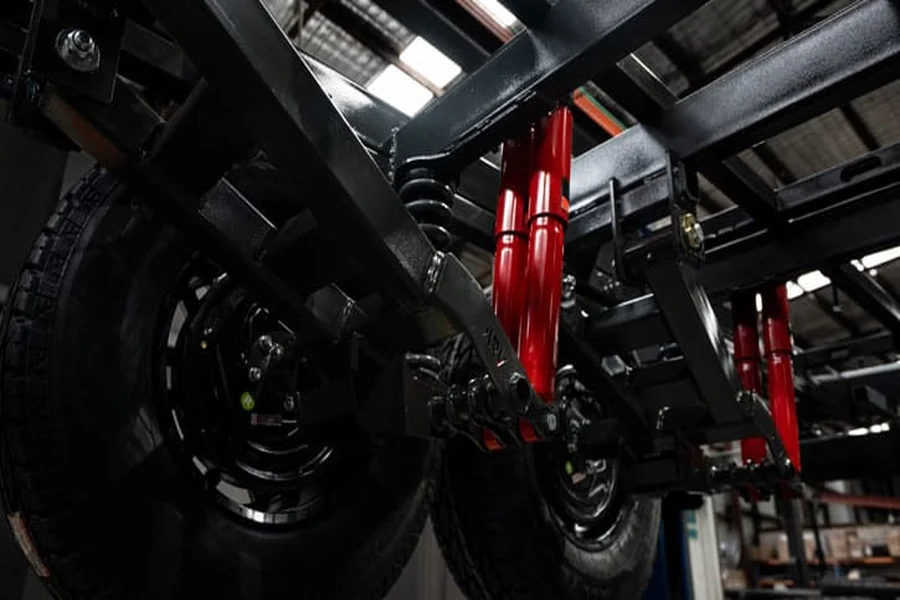
Introduction: Why Suspension Matters More Than Ever
Advanced suspension technology has become a defining factor in modern caravan performance, reshaping expectations of comfort, safety, and off-road capability. As caravans evolve from simple towable units into sophisticated mobile living environments, the demand for smoother handling and improved durability has increased significantly. Suspension is the bridge between the road and the living space, determining how much vibration, impact, and motion is transferred into the structure. A well-engineered system can dramatically improve the towing experience, reduce wear on components, and extend the lifespan of the entire build. For manufacturers and owners alike, suspension is no longer a secondary consideration—it is a core design element that influences every journey.
From Basic Axles to Engineered Systems
Traditional caravan builds relied heavily on rigid axle and leaf spring setups, which were simple, cost-effective, and relatively easy to maintain. However, these systems often struggle under real-world travel conditions, especially on uneven or unsealed roads. Impacts from potholes, corrugations, and sudden terrain changes are transferred directly into the chassis and interior structure. This leads to fatigue over time, increased maintenance needs, and a less comfortable experience for occupants. Additionally, limited articulation can reduce wheel contact with the ground, affecting stability and traction. As caravan use expands into more remote and demanding environments, these limitations become more apparent, driving the need for more advanced engineering solutions.
Independent Suspension and Ride Stability
Independent suspension systems represent a major leap forward in caravan design. Unlike solid axle systems, independent setups allow each wheel to move separately, adapting to road conditions in real time without forcing the opposite wheel to react. This results in significantly improved ride stability and reduced lateral movement within the caravan body. On rough terrain, independent suspension helps maintain consistent tire contact, which improves traction and reduces the risk of swaying or bouncing. It also minimizes the transfer of shock loads into furniture and internal fittings, preserving the integrity of the living space. For long-distance travel, especially on mixed terrain routes, this improvement translates directly into reduced fatigue for both the vehicle and its occupants.
Air Suspension and Adaptive Load Control
Air suspension systems add another layer of adaptability by allowing ride height and stiffness to be adjusted based on load conditions. Caravans often experience changing weight distributions due to water tanks, food supplies, and recreational equipment, which can affect balance and towing stability. Air suspension compensates for these variations by inflating or deflating air bags to maintain optimal alignment. This helps ensure that weight is evenly distributed across axles, reducing strain on both the caravan and the towing vehicle. It also enhances ground clearance when needed, making it easier to navigate uneven terrain or steep driveways. The ability to fine-tune suspension settings gives caravan owners a level of control that was previously impossible with traditional systems.
Shock Absorption, Geometry, and Structural Protection
Modern suspension design goes beyond springs and airbags by incorporating advanced shock absorbers and refined linkage geometries. These components work together to manage energy transfer, controlling how force is absorbed and dissipated during travel. A well-tuned damping system prevents excessive bouncing after impacts, allowing the caravan to quickly return to a stable state. Multi-link and trailing arm designs also increase wheel articulation, ensuring better contact with uneven surfaces and improving overall stability. In high-performance builds, an advanced chassis suspension system plays a critical role in distributing forces more evenly across the frame, reducing stress concentrations that could otherwise lead to structural fatigue or long-term damage. This integrated approach helps protect both the mechanical and living components of the caravan, ensuring longevity and reliability even under demanding conditions.
Load Management and Interior Durability
Suspension technology also plays a vital role in managing how weight shifts during travel. Poor load distribution can lead to instability, increased sway, and higher fuel consumption in towing vehicles. Modern systems help mitigate these issues by maintaining consistent ride height and reducing excessive body roll. Some setups even incorporate self-leveling capabilities, which adjust automatically when the caravan is parked on uneven ground. Inside the caravan, reduced vibration leads to fewer issues with loose fittings, cracked cabinetry, and damaged electronics. Appliances and fixtures benefit from a more stable environment, which improves their lifespan and reduces maintenance requirements. For occupants, the result is a quieter, smoother, and more comfortable travel experience, even over long distances.
The Future of Caravan Suspension Technology
The future of caravan suspension is moving toward intelligent, sensor-driven systems that can respond dynamically to changing road and load conditions. Emerging technologies include electronic damping control, real-time load monitoring, and automated leveling systems that adjust without driver input. These innovations aim to further reduce the gap between off-road capability and residential comfort. As materials improve and digital systems become more integrated, caravans will continue to evolve into highly adaptive travel platforms. Suspension will remain central to this evolution, acting as the foundation for performance, safety, and livability. Ultimately, advanced suspension technology is not just an upgrade—it is a transformative element that defines what modern caravan travel can achieve.