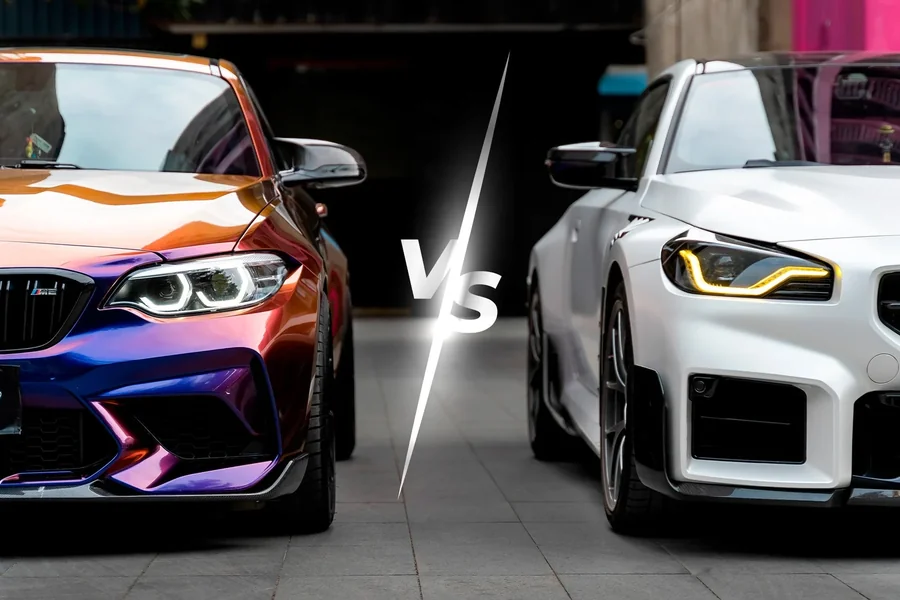
It might be assumed that the difference between the two would be insignificant, as both actions involve changing the look of the vehicle and protecting the factory paint, yet in reality, these two options vary significantly. Vinyl wrap will provide the car with an entirely new color or texture, whereas paint protection film primarily serves to protect the factory paint.
When considering which of the two options a car owner would choose, taking into account the difference between them would help him/her to allocate finances properly. The cost of car wrapping might seem to be lower when focusing on the price alone.
What Does a Car Wrap Do?
A car wrap uses large sheets of vinyl applied over the vehicle’s painted panels. It can change the colour, finish or overall appearance without permanently repainting the body.
Owners can choose from a wide range of finishes, including gloss, satin, matte, metallic and textured options. Some wraps are installed simply to refresh the appearance, while others are used to give an older vehicle a completely different look.
A wrap also creates a basic layer between the paint and the outside environment. However, it isn’t primarily an impact-protection product.
The lifespan of a wrap depends on the material, installation quality, exposure to sunlight, parking conditions and maintenance habits.
What Determines Car Wrapping Cost?
There is no universal price because several factors influence the final quotation.
Vehicle size is one of the obvious ones. A small hatchback requires less material than a large SUV. The type of vinyl also matters. Standard colours are usually more affordable than speciality finishes such as chrome, colour-shifting or premium textured films.
Coverage makes another difference. Wrapping the complete vehicle costs considerably more than covering selected panels, the roof or bonnet.
Installation quality should also be part of the calculation. A professional installer has to work around curves, handles, mirrors, body lines and panel edges without creating obvious wrinkles or poor joins.
Therefore, when comparing car wrapping cost, don’t simply ask, “How much is the wrap?” Ask what material, coverage and installation work are included in that amount.
How Is Paint Protection Film Different?
Paint protection film, commonly called PPF, is designed with a different purpose.
Instead of mainly changing the appearance of a vehicle, PPF creates a physical protective layer over the original paint. It can help absorb the effects of small stone impacts, road debris, light scratches and everyday abrasion.
It is often installed on high-risk areas such as the front bumper, bonnet, front fenders and side mirrors. Owners can also choose door edges, handles or full-body coverage.
Some modern PPF products feature self-healing top coats that can reduce the appearance of fine surface marks under suitable heat.
Unlike a vinyl wrap, PPF is primarily about preserving the paint underneath.
Which One Protects Better?
If the main concern is stone chips, PPF has the advantage.
Vinyl can provide some protection from minor surface wear, but it isn’t engineered in the same way as a dedicated paint protection film. A PPF layer is thicker and specifically designed to act as a sacrificial barrier.
This distinction becomes particularly relevant for cars that spend a lot of time on highways. Loose stones and road debris can cause surprisingly expensive cosmetic damage over time.
A wrap makes more sense when changing the car’s appearance is the priority.
Is PPF More Expensive?
Often, yes, particularly when comparing full-body installations.
But the answer depends on the film, vehicle size, coverage and installer. Premium PPF can cost considerably more than a basic vinyl wrap.
That doesn’t automatically make it poor value. If the objective is preserving factory paint, the two products are solving different problems.
A cheaper wrap isn’t necessarily a substitute for PPF, just as PPF isn’t necessarily the best choice for someone who simply wants a new colour.
Can You Use Both?
In some cases, owners can combine the two.
For example, a vehicle may receive PPF on the front bumper, bonnet and other high-impact sections, while vinyl is used on selected areas for a styling change.
However, compatibility between materials and installation methods should be confirmed with the manufacturer or experienced installer. Applying one material over another isn’t something that should be assumed to work simply because both are marketed for vehicle protection.
Think About Maintenance Too
Both treatments need sensible care.
Wrapped cars should generally be washed with products and techniques suitable for vinyl. Aggressive chemicals, excessive pressure or careless cleaning can shorten the material’s useful life.
PPF also benefits from regular washing and appropriate maintenance. Although it provides stronger physical protection, it isn’t indestructible.
In either case, installation quality plays a major role. Poorly prepared surfaces, trapped contamination or badly finished edges can affect the appearance and longevity of the treatment.
Conclusion
An analysis of the costs associated with wrapping versus Paint Protection Film can be done in light of the differences in use that come with each. Vinyl wrapping would mainly be for aesthetic purposes and a little bit of protection while paint protection film has the sole function of protecting the paint from any form of physical damage.
After assessing these factors, one gets into the position of either choosing what is cheap or what will serve the needs they have for the period in which they intend to use their vehicle.