
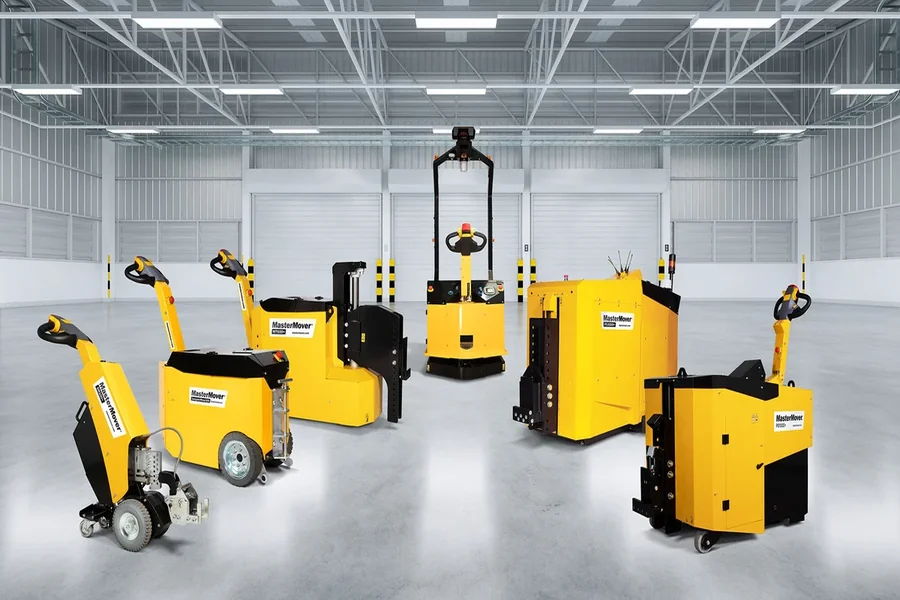
Modern warehouses are under constant pressure to move more goods in less time while maintaining high safety standards. As distribution centers become larger and order volumes continue to grow, businesses are searching for better ways to transport heavy loads efficiently without increasing the risk of workplace injuries. One solution that has become increasingly popular across logistics and industrial sectors is the tow tug.
Tow tugs, also known as electric tuggers or tow tractors, are compact powered machines designed to pull or push heavy wheeled loads. They are commonly used to move roll cages, pallet trailers, carts, and industrial trolleys throughout warehouses and manufacturing facilities. While forklifts have traditionally handled many material transport tasks, tow tugs are proving to be a safer, more efficient alternative for moving wheeled loads over long distances and through tight spaces.
As warehouse operations become more focused on productivity, ergonomics, and lean logistics, tow tugs are playing a major role in transforming how materials are moved across facilities.
Reducing Manual Handling Risks
One of the biggest benefits of tow tugs is their ability to reduce manual handling injuries. Warehouses frequently require workers to move heavy carts or trailer systems loaded with products, equipment, or materials. Repeated pushing and pulling of these loads can place significant strain on the back, shoulders, arms, and joints of employees.
Manual handling injuries are among the most common workplace incidents in warehouse environments. Even loads that appear manageable can become dangerous when moved repeatedly throughout a shift or when transported over uneven surfaces and ramps. Tow tugs greatly reduce the physical effort required by workers because the machine provides the traction and pulling power instead of the operator.
Rather than relying on several employees to push a line of heavy carts, a single worker can safely move multiple loads using an electric tug. This not only lowers the likelihood of injuries but also helps reduce worker fatigue. Employees who experience less physical strain are often able to maintain higher productivity levels throughout the workday.
In addition, many modern tow tugs include ergonomic controls, automatic braking systems, and variable speed settings that further improve operator safety and ease of use.
Improving Warehouse Efficiency
Efficiency is critical in modern logistics operations. Delays in moving products through a warehouse can slow down picking, packing, and shipping processes, ultimately affecting customer satisfaction and operational costs.
Tow tugs improve efficiency in several important ways.
Faster Material Movement
Tow tugs allow operators to transport multiple carts or trailers in a single trip. Instead of moving one cart at a time manually, workers can tow a train of carts simultaneously. This significantly reduces travel time across large warehouse facilities.
In high-volume operations, even small reductions in transport time can create substantial productivity gains over the course of a day. Faster internal transportation means products move through the warehouse more quickly, helping improve order fulfillment speed and inventory flow.
Reduced Dependence on Forklifts
Forklifts are essential in many warehouses, but they are not always the most efficient solution for horizontal transportation. Forklifts are larger, require wider aisles, and are primarily designed for lifting palletized goods.
Tow tugs are ideal when loads already have wheels and do not need to be lifted. Their compact size allows them to operate in narrow aisles and congested workspaces more effectively than forklifts. This helps improve traffic flow inside warehouses and reduces bottlenecks in busy areas.
Because tow tugs are easier to maneuver, operators can complete transport tasks more quickly and with greater precision.
Lean Logistics and Tugger Trains
Many warehouses and manufacturing facilities are adopting lean logistics systems that rely on tugger trains instead of forklifts. In these systems, tow tugs pull multiple carts along fixed routes throughout the facility, delivering materials exactly where they are needed.
This approach improves workflow organization and minimizes unnecessary movement within the warehouse. Tugger train systems are especially useful in facilities that require repetitive transportation of goods between storage areas, assembly lines, and shipping zones.
By creating standardized transport routes, businesses can improve consistency, reduce congestion, and optimize labor usage.
Enhancing Workplace Safety
Warehouse safety is a major concern for employers. Accidents involving forklifts, heavy loads, and manual handling can lead to serious injuries, equipment damage, and costly downtime.
Tow tugs help improve warehouse safety in several ways.
Better Visibility
Pedestrian-operated tow tugs typically allow operators to walk alongside or behind the machine while maintaining a clear view of the load and surrounding environment. This can reduce blind spots and improve awareness compared to larger forklifts.
Improved visibility is particularly important in busy warehouses where workers, equipment, and inventory are constantly moving through shared spaces.
Controlled Movement
Modern tow tugs are designed for smooth and controlled operation. Features such as variable speed controls, anti-roll braking systems, and automatic stopping functions help reduce the risk of collisions and load instability.
Controlled acceleration and braking are especially important when transporting fragile or high-value products. Operators can maneuver loads carefully through narrow aisles and around corners without sudden movements that could damage inventory.
Reduced Congestion
Forklifts often require large turning radiuses and wider travel lanes. Tow tugs, on the other hand, are smaller and more agile, allowing warehouses to maximize available floor space.
Using tow tugs can help reduce traffic congestion within facilities, lowering the risk of accidents between vehicles and pedestrians. Their compact design also allows businesses to operate efficiently in warehouses with limited space.
Supporting Modern Warehouse Operations
As e-commerce and rapid fulfillment continue to reshape the logistics industry, warehouses are being forced to handle larger volumes of inventory at faster speeds. Tow tugs support these demands by providing a scalable and flexible material handling solution.
Electric tow tugs are also becoming more environmentally friendly. Many modern units use lithium-ion battery systems that provide long operating times, fast charging, and reduced maintenance requirements. Because they produce no emissions during operation, electric tow tugs are well suited for indoor warehouse environments.
Automation is another growing trend in warehouse logistics. Some facilities are integrating autonomous tug systems and automated guided vehicles (AGVs) into their operations. These systems can transport loads along programmed routes with minimal human intervention, further improving efficiency and consistency.
Conclusion
Tow tugs have become an essential tool in modern warehouses handling large loads. By reducing manual handling, improving transportation efficiency, and enhancing workplace safety, they offer significant advantages over traditional material handling methods.
Their ability to move multiple heavy loads with precision and minimal physical effort makes them ideal for fast-paced warehouse environments. As businesses continue to prioritize productivity, employee safety, and lean logistics practices, tow tugs are likely to play an even greater role in the future of material handling operations.
For warehouses seeking to improve operational performance while reducing workplace risks, tow tugs provide a practical, efficient, and increasingly indispensable solution.