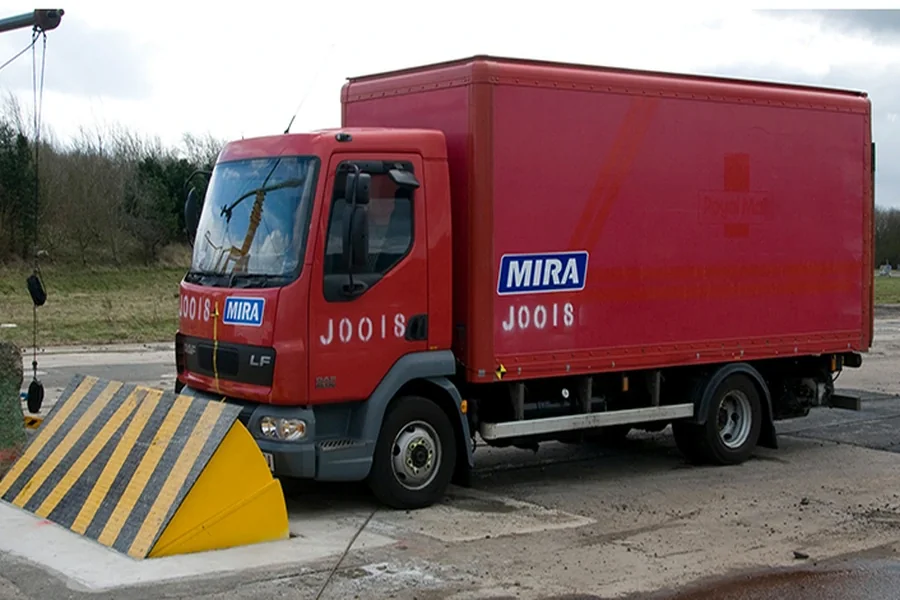
Controlling vehicle access is an essential part of modern security planning, particularly in locations where unauthorized entry could represent a serious risk. From government buildings and military facilities to industrial sites and critical infrastructure, a road blocker can provide a robust physical barrier designed to prevent unauthorized vehicles from passing through protected entrances.
Unlike conventional access barriers, road blockers are specifically developed for situations where a higher level of physical resistance is required.
What Is a Road Blocker?
A road blocker is a security device installed across a roadway to control or prevent vehicle access. When activated, its reinforced blocking element rises from or moves into position across the passage, creating a physical obstacle for vehicles.
When access is authorized, the system can be lowered to allow vehicles to pass. Depending on the configuration, operation can be automatic or integrated with a wider access control system.
This makes road blockers particularly suitable for entrances where vehicle security must be combined with controlled and regular traffic.
Where Are Road Blockers Used?
Road blockers are generally installed in locations where vehicle access requires a higher level of protection than a standard barrier can provide.
Typical applications include:
1. Military and defence facilities
2. Embassies and diplomatic buildings
3. Government institutions
4. Airports and logistics facilities
5. Industrial plants
6. Corporate headquarters
7. Critical infrastructure
8. High-security private properties
They can also be used to protect public and private buildings where the risk of unauthorized vehicle access needs to be carefully managed.
Road Blocker vs. Conventional Barrier
Automatic barriers are primarily designed to regulate traffic. They can efficiently control who enters and exits a site, but their main function is traffic management.
A road blocker, on the other hand, is designed with physical protection in mind. Its reinforced structure provides a significantly stronger obstacle and can therefore be incorporated into security strategies where stopping an unauthorized vehicle is a priority.
For this reason, road blockers and automatic barriers can often work together rather than being considered competing solutions. A barrier can manage everyday traffic, while a road blocker provides an additional layer of physical protection.
Hydraulic Road Blockers
Hydraulic technology is commonly used in high-security access control because it can provide powerful and controlled movement.
A hydraulic road blocker can be operated through a dedicated control unit and integrated with other security equipment. Emergency manual release systems can also be incorporated into certain configurations, allowing the blocker to be lowered when necessary even in the event of a power failure.
The choice of hydraulic configuration depends on the characteristics of the site, the frequency of use and the required level of protection.
Customization and Installation
Every security entrance has different technical requirements. Road width, available installation depth, traffic frequency, required height and the surrounding architecture can all influence the design of the system.
For this reason, customizable road blockers can offer significant advantages. Dimensions, finishes, reflective elements and additional accessories can be adapted to the characteristics of the project.
Installation conditions are particularly important. Some sites may have sufficient space for a conventional underground installation, while others may have restrictions that require a more compact solution.
Integrating Road Blockers with Other Security Systems
A road blocker rarely operates in isolation. Modern vehicle access control can combine several technologies to create a layered security system.
Depending on the site, a road blocker can work alongside automatic or fixed bollards, tyre killers, barriers, traffic lights, access control software and identification systems.
This approach allows security managers to create different levels of access according to vehicle authorization, operating hours or specific security procedures.
Durability and Long-Term Performance
Because road blockers are installed outdoors and may be exposed to frequent vehicle movements and changing weather conditions, durability is a key consideration.
Robust steel construction and appropriate corrosion protection can contribute to long-term performance. Regular maintenance is also important to ensure that mechanical and hydraulic components continue to operate correctly.
For intensive-use environments, selecting a system designed specifically for frequent operation can help improve reliability and reduce potential downtime.
A Strategic Investment in Vehicle Security
A road blocker can represent an important component of a comprehensive perimeter protection strategy. By physically controlling vehicle access, it helps organizations protect sensitive areas while still allowing authorized traffic to enter efficiently.
The most appropriate solution depends on the specific risk profile, installation conditions and operational requirements of each site. With careful planning and integration with other access control technologies, road blockers can provide a reliable balance between security, functionality and controlled vehicle movement.